
Why Hydroponic Gardens Need Superior Water Filtration
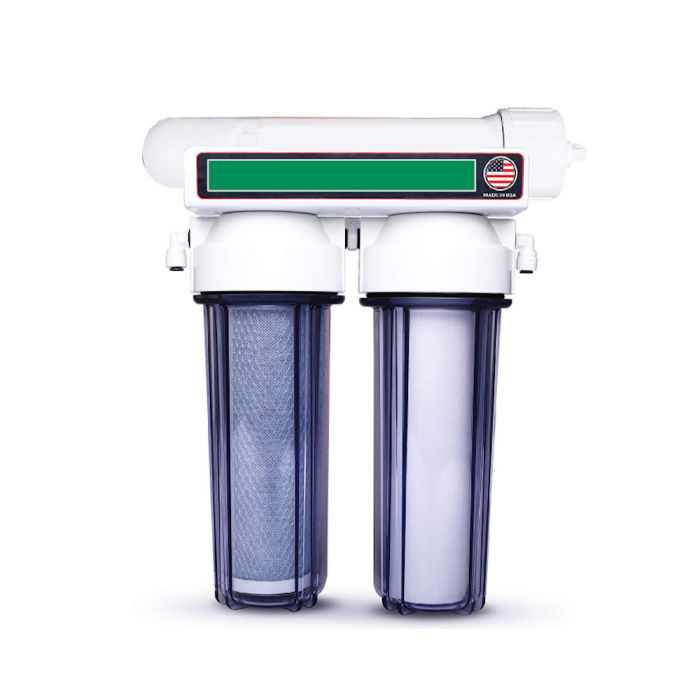
Hydroponics, the art of growing plants without soil, offers a cleaner, more controlled way to cultivate crops. However, this innovative method comes with its challenges, one of the most critical being water quality. When water is the primary medium for nutrient delivery, its purity can make or break your hydroponic garden. Understanding the importance of clean, contaminant-free water is essential for anyone looking to optimize their hydroponic system.
At Aqua True Blue, we value the science behind hydroponics and water’s role in ensuring plant health. Let’s explore why hydroponics water filtration is necessary for successful gardening and how superior systems like the Ultrafiltration 4-Stage Water System provide the solution.
The Role of Water in Hydroponics
Water is more than just a hydration source in hydroponics—it’s the system’s lifeline. It delivers essential nutrients directly to plant roots and maintains the balance of your garden’s ecosystem. Any contaminants in this water, such as bacteria, viruses, or dissolved solids, can disrupt nutrient absorption and harm plant growth.
Without proper filtration, impurities accumulate, leading to clogged systems, imbalanced pH levels, and even plant diseases. Hydroponic gardens thrive when their water is as clean and balanced as possible, making filtration an integral part of the process.
Why Contaminant-Free Water Matters
Hydroponic systems are closed-loop environments, meaning water is often recirculated. While this conserves resources, it also makes the system more vulnerable to contamination. Without effective filtration, unwanted substances such as:
Bacteria and Viruses: These can damage plant roots and stunt growth.
Dissolved Solids and Minerals: Excess amounts can create toxic conditions for plants.
Organic Impurities: They encourage algae growth, which competes with plants for nutrients and oxygen.
These issues reduce plant yield and increase maintenance efforts and costs. Therefore, investing in a high-quality filtration system tailored for hydroponics is non-negotiable.
Ultrafiltration: A Game-Changer for Hydroponics Water Filtration
One of the most effective solutions for hydroponic water management is ultrafiltration technology. Unlike reverse osmosis, which produces wastewater and removes beneficial minerals, ultrafiltration strikes a balance.
The Ultrafiltration 4-Stage Water System is designed to provide clean water without stripping away the minerals that plants rely on for healthy growth. Its key features include:
Advanced Filtration: The UF membrane filters contaminants as small as 0.01 microns, effectively removing bacteria, viruses, and organic matter.
Multi-Stage Purity: The system ensures water is free from impurities through four stages of filtration: sediment, GAC, carbon, and post-carbon.
Zero Waste: Unlike reverse osmosis, ultrafiltration doesn’t generate wastewater, making it an eco-friendly option for sustainable gardening.
Simple Maintenance: Regular flushing of the UF membrane keeps it functioning optimally, ensuring long-term performance.
The Impact of Clean Water on Hydroponic Gardens
Clean water is the foundation of a healthy hydroponic system. Here’s how superior water filtration benefits your plants:
Improved Nutrient Absorption: Plants can absorb nutrients more efficiently without contaminants interfering, leading to robust growth.
Healthier Root Systems: Filtered water prevents root diseases caused by bacteria or viruses.
Reduced System Maintenance: Clean water keeps hydroponic components like pumps and tubing free from buildup, extending their lifespan.
Consistent Growth: A stable and contaminant-free water supply allows plants to experience fewer growth interruptions and produce higher yields.
Practical Tips for Maintaining Water Quality in Hydroponics
To ensure your hydroponic system thrives, consider these water quality tips:
Regular Testing: Regularly check pH and nutrient levels to maintain the right balance.
System Flushing: Periodically flush your filtration system to remove accumulated contaminants.
Filter Replacement: Replace filters as the manufacturer recommends to ensure optimal performance.
Prevent Algae Growth: To block light and reduce algae formation, keep your system covered.
These steps allow you to create an environment where your plants flourish, and your hydroponic system operates efficiently.
Final Thoughts
The success of a hydroponic garden begins with the water it uses. Contaminant-free water ensures healthier plants, higher yields, and less maintenance, making
hydroponics water filtration a priority for growers. Systems like the Ultrafiltration 4-Stage Water System bring unmatched efficiency and convenience, providing clean, mineral-rich water for your garden.
At Aqua True Blue, we’re proud to support hydroponic gardeners with innovative water filtration solutions that enhance growth and sustainability. Together, let’s cultivate a future of thriving plants and cleaner water.
Everything You Need to Know About Reverse Osmosis Systems for Home Use
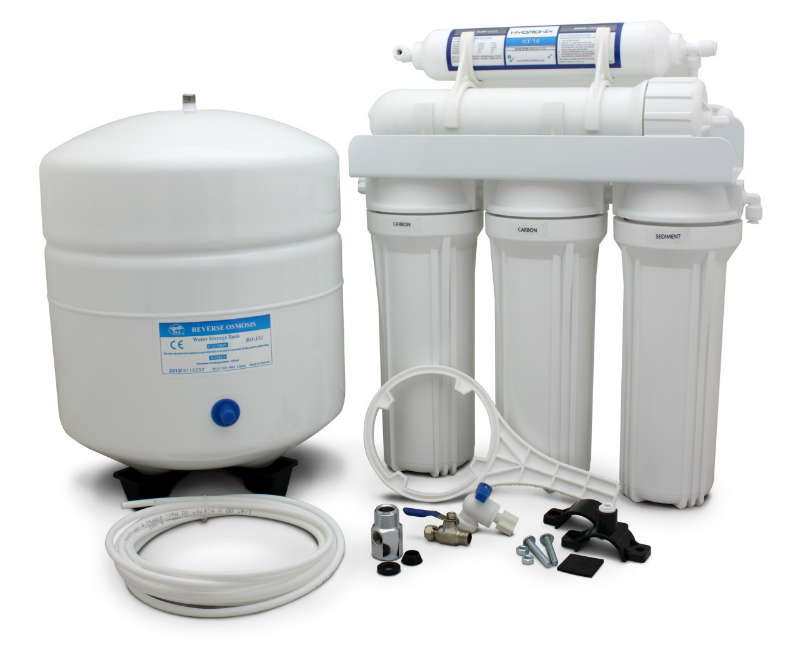
At Aqua True Blue, we understand that clean, safe drinking water is essential for your health and well-being. One of the most effective ways to ensure your water is free of harmful contaminants is by installing a Reverse Osmosis (RO) system. In this guide, we’ll walk you through everything you need about Reverse Osmosis systems, particularly for home use, and highlight the advantages of choosing a 6-stage RO system, especially for healthy water.
What is a Reverse Osmosis Water System for Home?
A Reverse Osmosis water system for home use is a filtration technology that removes impurities from water by forcing it through a semi-permeable membrane. This process allows only pure water molecules to pass through, effectively separating harmful contaminants like chemicals, heavy metals, and microorganisms.
In a typical home water filtration system, impurities like chlorine, iron, pesticides, and bacteria can affect the taste and safety of water. A Reverse Osmosis System provides a reliable
solution by purifying water, removing up to 99% of these contaminants, ensuring your family has access to the cleanest water possible.
How Does Reverse Osmosis Work?
The Reverse Osmosis process begins with the water being pushed through multiple filters to remove large particles, sediment, and chlorine. Once it reaches the RO membrane, water is forced through the membrane’s tiny pores under pressure. Only water molecules and a few other small particles can pass through, while larger contaminants are left behind and flushed out of the system. This ensures that you get water that’s free of impurities.
The 6-Stage Reverse Osmosis System – Why Choose It?
The Aqua True Blue 6-stage Reverse Osmosis System is an excellent option for well water users. It goes beyond essential filtration by incorporating additional stages to remove many contaminants, especially those commonly found in healthy water.
1. Stage One: Pre-Filter (Sediment Filter)
The first stage involves a sediment filter, which captures dirt, sand, and larger particles, preventing them from clogging the system and extending the life of the subsequent filters.
2. Stage Two: Carbon Filter (GAC)
In this stage, a granular activated carbon (GAC) filter removes chlorine, pesticides, and other chemicals. Chlorine, in particular, can affect the taste and odor of your water, so this step is vital for improving the overall quality.
3. Stage Three: Iron Pre-Filter
Iron can be a significant issue for well water users. This stage uses an iron prefilter, specifically targeting iron and protecting the RO membrane from damage caused by iron buildup. Iron can cause stains and scale in plumbing, so this filter ensures your system remains efficient and effective.
4. Stage Four: Reverse Osmosis Membrane
The RO membrane is the heart of the system. It removes up to 99% of contaminants, including heavy metals, salts, chemicals, and microorganisms. At this stage, your water undergoes a thorough purification process, ensuring it’s safe to drink.
5. Stage Five: UV Filter
The UV filter is a powerful tool for destroying harmful microorganisms such as bacteria, viruses, and other pathogens that may still be present in your water. This additional stage offers an extra layer of protection, ensuring that your water is clean and free from harmful germs.
6. Stage Six: Anti-Scaling Cartridge
Finally, an anti-scaling phosphate cartridge helps prevent scale buildup in the system, ensuring the longevity and continued efficiency of the RO unit. This filter helps maintain the system’s performance over time.
Final Thoughts
A Reverse Osmosis water system for home use is one of the best investments you can make to improve your water quality. Whether you are dealing with high TDS, iron, or microorganisms in healthy water, a 6-stage RO system can effectively address these issues and provide pure, great-tasting water. At Aqua True Blue, we are dedicated to offering the best filtration systems to meet your needs. Choose our Reverse Osmosis Systems for clean, safe water that you can rely on for years.
How the Anti-Scale Water Filter Cartridge Protects Your Plumbing

When it comes to maintaining the health and efficiency of your plumbing system, preventing scale buildup is crucial. At Aqua True Blue, we understand that homeowners want a reliable solution that protects their pipes, fixtures, and appliances without the drawbacks of traditional water softeners. That’s where our 4.5″ x 20″ TAC (Template Assisted Crystallization) Anti-Scale Water Filter Cartridge comes into play.
This blog post explores how this innovative cartridge works and how it can benefit your home through our salt free whole house water treatment solutions.
Understanding Scale Buildup
Before diving into how the TAC cartridge works, let’s discuss scale buildup and why it concerns homeowners. Hard water, which contains high levels of minerals like calcium and magnesium, can lead to the formation of scale deposits over time. This scaling can accumulate in pipes, faucets, and appliances, reducing water flow, increased energy consumption, and costly repairs.
The Impact of Scale on Your Plumbing
Reduced Water Flow: Scale deposits can constrict water flow in pipes, leading to lower water pressure and inefficient water delivery throughout your home.
Increased Energy Costs: Appliances like water heaters and dishwashers have to work harder to push water through scaled pipes, leading to increased energy consumption and higher utility bills.
Shortened Appliance Lifespan: Scaling can cause wear and tear on your appliances, potentially leading to breakdowns or the need for early replacement.
The TAC Anti-Scale Cartridge: A Solution for Scaling
Our 4.5″ x 20″ TAC cartridge uses a unique process to combat the effects of hard water without the use of salt or chemicals. Here’s how it works:
Template Assisted Crystallization (TAC) Explained
TAC technology transforms calcium ions in the water into tiny calcium crystals. Unlike traditional water softeners that remove these minerals, TAC allows them to remain in the water in a non-problematic form. These tiny crystals are stable and will not attach to pipes or fixtures, effectively preventing the scale buildup that can lead to costly plumbing issues.
No Salt, No Chemicals: The TAC process doesn’t require salt or chemical additives, making it an environmentally friendly option for homeowners. This means you won’t have to deal with the brine tank maintenance often associated with traditional softeners.
No Electricity Needed: Another advantage of the TAC system is that it operates without electricity, making it a low-maintenance option that saves energy and keeps costs down.
Self-Rinsing: The tiny calcium crystals created by the TAC process are easily rinsed away by the water flow, preventing any accumulation that could lead to clogs or scale.
Benefits of the TAC Anti-Scale Cartridge for Your Plumbing
Protecting Your Pipes
By preventing scale buildup, the TAC cartridge helps maintain the integrity of your plumbing system. Without the threat of hard mineral deposits, your pipes can continue to function effectively without restrictions. This leads to smoother water flow and less stress on your plumbing infrastructure.
Preserving Your Fixtures
Faucets, showerheads, and other fixtures can suffer from unsightly scale buildup that not only looks bad but can also impede performance. Using the TAC cartridge ensures that your fixtures remain free from mineral deposits, helping them last longer and maintain functionality.
Extending Appliance Life
Hard water often impacts appliances like dishwashers, water heaters, and coffee makers. Scale can cause heating elements to work less efficiently, leading to breakdowns over time. With the protection of our TAC Anti-Scale cartridge, you can help extend the life of your appliances, ultimately saving you money on repairs and replacements.
Easy Installation and Maintenance
The TAC cartridge is designed to be user-friendly. It can be easily installed on the cold water line before any water heating device, such as a conventional or tankless water heater. This straightforward setup ensures that your entire plumbing system benefits from salt-free whole-house water treatment right from the start.
A Sustainable Choice for Your Home
Choosing a saltless house water treatment system is not just about protecting your plumbing; it’s also about making a sustainable choice for your home and the environment. Opting for a TAC Anti-Scale cartridge reduces your reliance on chemicals and contributes to a healthier ecosystem.
Final Thoughts
At Aqua True Blue, we are committed to providing innovative solutions for homeowners seeking effective and eco-friendly water treatment options. The 4.5″ x 20″ TAC Anti-Scale Water Filter Cartridge is an excellent way to safeguard your plumbing system, preserve your fixtures, and extend the life of your appliances—all while enjoying the benefits of salt-free water treatment.
Consider the TAC Anti-Scale cartridge if you’re ready to experience the advantages of a salt-free whole-house water treatment system. Your plumbing will thank you.
Why Invest in an Iron Pro Water Softener – Benefits for Your Home

At Aqua True Blue, we understand the importance of having clean, soft water in your home. Installing an Iron Pro Water Softener is one of the best ways to achieve this. This innovative system offers numerous benefits that enhance your daily life, making it a worthwhile investment for your home. In this blog, we’ll explore the key advantages of the Iron Pro Water Softener, especially its fine mesh resin and capacity for iron removal, all while focusing on the benefits of a water softener system for home use.
What is a Water Softener System for Home?
A water softener system is designed to treat hard water by removing excess minerals, primarily calcium and magnesium. These minerals can lead to problems such as scale buildup in pipes and appliances, reduced effectiveness of soaps and detergents, and even skin irritation. The Iron Pro Water Softener takes this further by explicitly addressing iron removal, a common concern for many homeowners.
Fine Mesh Resin – A Game Changer
One of the standout features of the Iron Pro Water Softener is its fine mesh resin. This specialized resin improves the system’s capacity for iron removal, which is especially beneficial if your water supply contains higher iron levels.
Enhanced Iron Removal
Iron in your water can cause a variety of issues, including fixture staining, unpleasant odors, and a metallic taste. The fine mesh resin effectively captures these iron particles, ensuring that your water is soft and free from these troublesome contaminants. This leads to cleaner water for drinking, cooking, and bathing.
Longer Lasting Efficiency
The fine mesh resin also contributes to the longevity and efficiency of the water softener system. By improving the resin’s capacity to handle iron, the Iron Pro minimizes the frequency of resin replacement, saving you both time and money. With proper maintenance, your water softener can provide consistent performance for many years.
Fleck 5800SXT Control Head – User-Friendly Technology
The Iron Pro features the Fleck 5800SXT control head, known for its advanced technology and user-friendly interface. The digital controls provide an informative display that keeps you updated on the system’s status and any error codes that may arise.
Easy Setup and Operation
Thanks to the intuitive touchpad controls, setting up the Iron Pro water softener is straightforward. Even if you’re not tech-savvy, you’ll find it easy to navigate the features and settings, making maintaining your water softener system a hassle-free experience.
Real-Time Monitoring
With the LCD digital display, you can quickly check the current system status at a glance. This feature allows easy troubleshooting, ensuring any issues can be addressed promptly. The peace of mind from knowing your water softener is functioning correctly is invaluable.
Benefits of Soft Water
Investing in the Iron Pro Water Softener comes with several tangible benefits that extend beyond just cleaner water. Here are some of the most notable advantages:
Cleaner and Brighter Dishes
Using softened water makes your silverware and glassware look cleaner and shinier. The reduction in soap curd formation means less scrubbing, resulting in more time enjoying your clean dishes.
Softer Skin and Hair
After switching to softened water, Many notices that their skin feels softer and their hair looks shinier. Hard water can leave residues that dry out your skin and hair, so making the switch can lead to noticeable improvements in your overall appearance.
Reduced Household Chores
Softened water dramatically reduces housework by eliminating the formation of soap curd. Tasks like cleaning the bathroom or washing dishes take less effort, allowing you to spend more time on activities you enjoy.
Extended Appliance Life
Hard water can damage appliances like dishwashers and water heaters. A water softener system can extend the lifespan of these appliances, leading to fewer repairs and replacements. Softened water can reduce appliance energy costs by up to 29%, making it a wise investment for your home.
Environmentally Friendly Choice
Choosing a water softener system also has positive environmental implications. It can decrease your household’s chemical footprint by reducing the need for harsh detergents and soaps, which is better for your family and the planet.
Final Thoughts
Investing in an Iron Pro Water Softener is a decision that brings a multitude of benefits to your home. From its fine mesh resin that effectively removes iron to the user-friendly Fleck 5600SXT control head, this water softener system offers convenience and quality that you can rely on.
The advantages are clear: cleaner dishes, softer skin, reduced household chores, and extended appliance life. At Aqua True Blue, we believe every home deserves access to high-quality water, and the Iron Pro Water Softener can help you achieve that. Consider investing in a water softener system for home use for a healthier, more comfortable living environment. If you have any questions or want to learn more about our water softener systems, feel free to reach out.
Adding Calcite and/or Corosex to Down Flow and Up Flow Neutralizer Tanks: Step-by-Step Guide

The calcite media has dust in it. Make sure to wear a paper mask or ensure proper ventilation to prevent inhaling the dust.
Adding Calcite in Top Plug Down-Flow Type Neutralizers
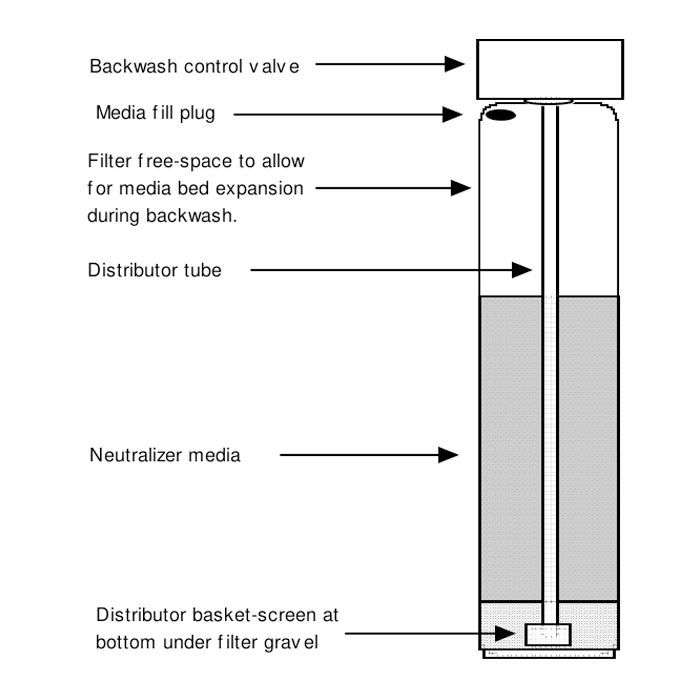
It has has a backwash control valve.
Remember to test the pH before and after using the neutralizer from time to time. If the pH is below 7.0, it’s acidic; ideally, it should be between 7.2 and 8.0 to stop pipes and fixtures from corroding. Every year or so, based on the pH readings, include additional calcite media to the neutralizer filter using these steps.
- 1. To begin, place the neutralizer filter on bypass or turn off the water pressure before the neutralizer.
- 2. Start a manual backwash cycle. With the system on bypass, this will release the pressure inside the control valve, allowing you to safely unscrew the Media Fill Plug situated on the top of the neutralizer tank. Disconnect the control valve cord from the wall outlet.
- 3. Use channel locks or pliers to unscrew the media fill plug. Use a tube or hose to siphon out 2 to 3 gallons of water from the filter tank. If you skip this step, water will flow out of the fill plug hole and onto the floor when you add the filter media. If having water on the floor is acceptable, you can skip the siphoning and directly pour the calcite media into the top fill plug hole.
- 4. Add the neutralizer filter media until the tank is about 2/3 full. Avoid overfilling; make sure there’s at least 12 inches of free space above the media to accommodate expansion during backwash.
- 5. Reconnect the control valve to the power, and gradually turn the bypass valve back to the service position. (When it’s in “service,” the system is set for filtering and neutralizing.) Allow the system to complete a full backwash and rinse cycle. Repeat the backwash cycle by initiating another manual cycle. This ensures thorough backwashing and rinsing of the neutralizer before putting it back into operation.
Adding Calcite in Down-Flow Type Neutralizers with No Top Fill Plug
- 1. To start, place the neutralizer filter on bypass or turn off the water pressure before the neutralizer.
- 2. Trigger a manual backwash cycle. As it’s on bypass, this will release the pressure within the control valve, allowing you to safely remove the backwash control valve located atop the neutralizer tank. Disconnect the control valve cord from the wall outlet.
- 3. After removing the control valve by unscrewing it, insert a small tube or hose into the distributor tube and siphon out a few gallons of water from the neutralizer. If you skip this step and directly add filter media, water might overflow from the top of the tank and spill onto the floor. If having water on the floor is acceptable, then you can skip siphoning water before pouring calcite media through the top fill plug hole.
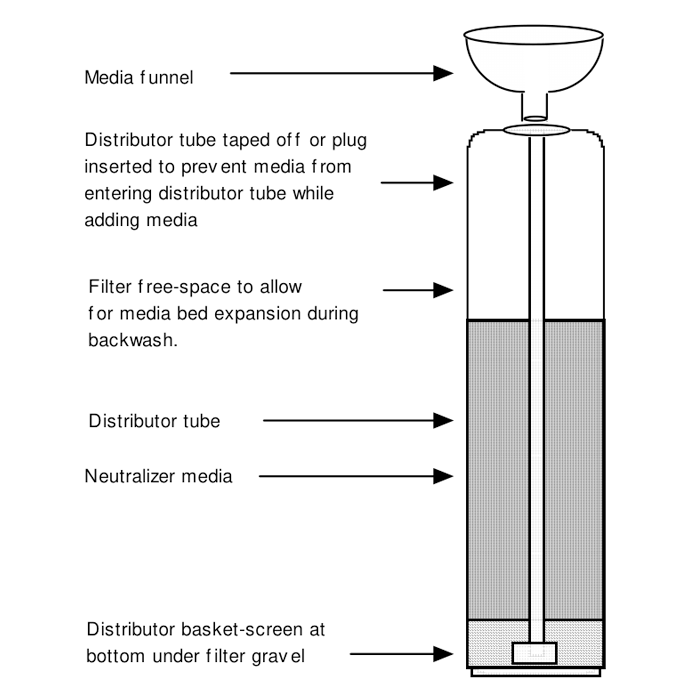
- 4. Securely cover the top of the distributor tube with tape (black electrical tape works well) to prevent media from entering the distributor tube. Use a single piece of tape, leaving around 1/2″ of tape free for easy removal once media addition is complete.
- 5. Add neutralizer filter media until the tank is approximately 2/3 full. Avoid over-filling; ensure there’s at least 12″ of empty space above the media to allow for expansion during backwash.
- 6. Reattach the backwash control valve and plug the control valve cord back into the electrical outlet. Gradually turn the bypass valve back to the service position (if it’s in “service,” it’s set for filtering and neutralizing). Let the system complete a full backwash and rinse cycle. Repeat the backwash cycle by initiating another manual cycle, ensuring a thorough backwash and rinse before returning the neutralizer to service.
Understanding the Contrast Between Up-Flow and Down-Flow Calcite Neutralizers
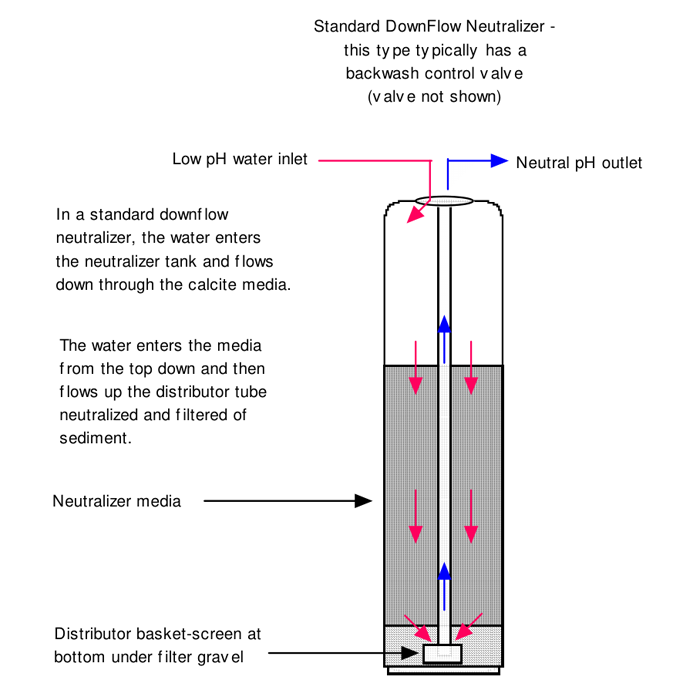
Down-Flow neutralizers come with backwashing control valves:
In a typical downflow neutralizer, water enters the tank’s top and moves downward through the media, then upward through the distributor tube. This design clears out sediment and enables backwashing, a process that cleans and rearranges the calcite to prevent uneven flow. During backwash, the water direction reverses, moving downward through the distributor tube and upward through the media, lifting and expanding the calcite media. Throughout backwash, the flow of water works to purify the calcite.
No Backwashing Control Valves Required for Up-Flow Neutralizers:
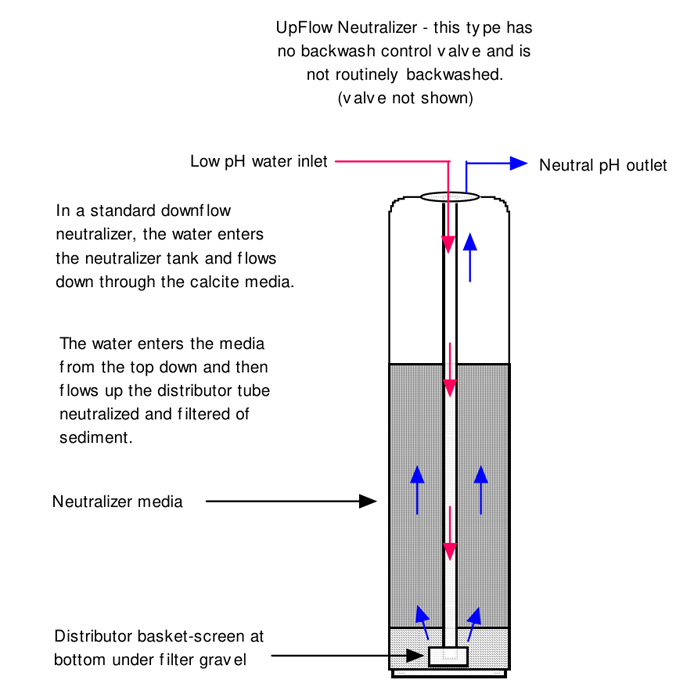
In the case of up-flow neutralizers, water consistently moves down the distributor tube and then upwards through the calcite media. Unlike other types, up-flow neutralizers don’t possess or require a backwash control valve. The absence of backwashing is due to the continuous upward flow through the calcite, eliminating the necessity for such a process. While this design suits certain scenarios and eliminates the need for a backwash drain link, it’s worth noting that up-flow variants can sometimes encounter issues related to channelling.
Including Calcite in Up-Flow Type Neutralizers – Whether With or Without a Top Fill Plug
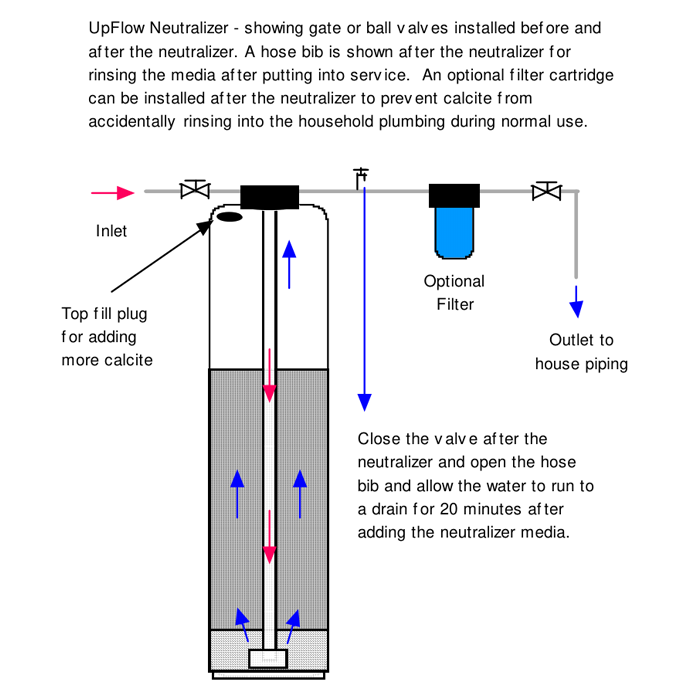
- 1. To start, either put the neutralizer filter on bypass or turn off the water pressure before the neutralizer. Open a faucet or hose bib downstream of the neutralizer to release pressure in the neutralizer tank.
- 2. Use channel locks or pliers to unscrew the media fill plug. Use a tube or hose to siphon out 2 to 3 gallons of water from the filter tank. If you don’t do this, water will flow out of the fill plug hole and onto the floor when you add filter media. If water on the floor is acceptable, you can skip this step and directly pour calcite media into the top fill plug hole.
- 3. If there’s no top fill plug, unscrew the top tank manifold to access the tank and add calcite media.
- 4. Add neutralizer filter media until the tank is about 2/3 full. Don’t overfill; ensure there’s at least 12″ of free space above the media to allow for expansion during backwash.
- 5. Put back the top fill plug or tank manifold. Close the valve after the upflow neutralizer to stop water flow to the house. Open the hose bib after the neutralizer and gradually turn on the water to the neutralizer. Start with a slow flow for 10 minutes before switching to full force. Rinse the media thoroughly for 20 minutes before putting it into service, if possible.
Is Your Tap Water Harming You? Find Your Ideal Whole House Filter Here!
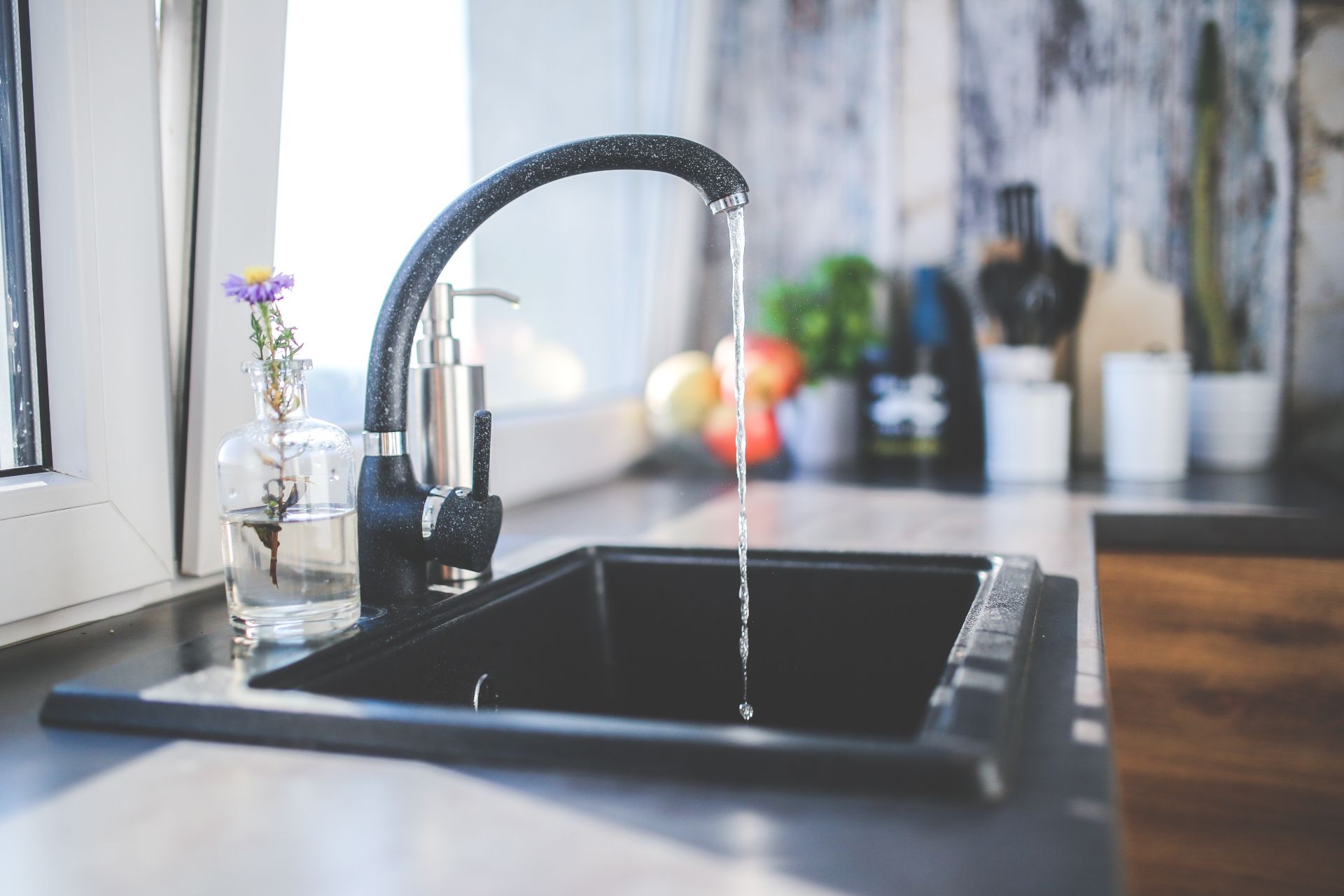
Water is essential for life, but the quality of our tap water is becoming an increasing concern. Every day, we rely on water for drinking, cooking, and bathing, yet we may not be aware of the harmful contaminants lurking in our taps. From pollutants and heavy metals to chlorine and other chemicals, our water sources can be compromised, affecting our health and well-being.
The solution to safeguarding your family’s health lies in finding the ideal whole house water filter. These advanced filtration systems can effectively remove a wide range of impurities, ensuring that every drop of water flowing through your home is clean, pure, and safe for use. In this article, we’re diving into the world of tap water and exploring how a whole house water filter can be your hero in ensuring the water you use at home is safe and free from harmful contaminants. So, let’s get right to it!
Why Worry About Tap Water?
- The Trouble with Tap Water Contaminants:
You might be thinking, “Why should I worry about tap water? It’s regulated, right?” Well, yes, tap water undergoes treatment to make it safe for consumption. However, it can still pick up some unwelcome hitchhikers on its journey from the water treatment plant to your faucet. - Common Contaminants That Sneak into Tap Water:
Tap water can contain a variety of contaminants, including chemicals like chlorine used for disinfection, heavy metals like lead and mercury, sediments, and even harmful bacteria and viruses. Prolonged exposure to these contaminants can lead to health issues, including gastrointestinal problems, skin irritations, and long-term health risks.
The Whole House Water Filtration Solution!
Advantages of Whole House Water Filtration
Now, you might be thinking, “Can’t I just use a water filter pitcher or faucet filter?” Sure, these can be helpful, but they only treat water at specific points. If you want comprehensive protection for your entire home, a whole house water filtration system is the way to go!
- 360° Protection for Your Home: The beauty of a whole house filter is that it treats water at the point of entry, ensuring that every drop of water entering your home is clean and safe. From the kitchen sink to the bathroom shower, you’ll enjoy the peace of mind that comes with knowing your water is free from harmful contaminants.
- Say Goodbye to Foul Tastes and Odors: Ever had a glass of water that tasted like you were drinking from a swimming pool? Yikes! Whole house filters not only remove contaminants but also improve the taste and smell of your water. Say goodbye to that chlorine aftertaste and hello to refreshing, clean water!
- Extend the Life of Your Plumbing and Appliances: Contaminants in water can take a toll on your plumbing and household appliances. Sediment buildup and mineral deposits can wreak havoc on your pipes, faucets, and water-using appliances. A whole house water filter can prevent this damage, potentially saving you money on repairs and replacements in the long run.
Finding Your Ideal Whole House Filter!
1) Identify Your Water Quality Needs
Before you dive into the world of whole house filters, it’s essential to understand your water quality. Testing your water can help identify specific contaminants present in your area and determine the best filter for your needs.
- Testing Kits: You can find water testing kits online or through local laboratories. These kits usually come with simple instructions on how to collect a water sample from your tap and send it off for analysis. Alternatively, you can contact your local water utility to request a copy of your area’s water quality report.
- Decoding Your Water Quality Report: Water quality reports may look intimidating at first, but fear not! They typically break down the levels of different contaminants found in your water and compare them to health standards set by regulatory bodies. Look for any red flags and pay attention to contaminants that exceed safe limits.
- Know Your Flow Rate: Understanding your household’s water usage and flow rate is crucial for choosing the right whole house filter. A higher flow rate may require a more robust filtration system to ensure optimal performance.
2) Types of Whole House Filters
Now that you’ve got a handle on your water quality needs, it’s time to explore the different types of whole house filters available.
- Sediment Filters: Sediment filters work like a sieve, capturing and removing particles and debris from the water. These are great for areas with high sediment content in their water supply.
- Activated Carbon Filters: Activated carbon filters are excellent for reducing chlorine, volatile organic compounds (VOCs), and improving taste and odor. They are like a breath mint for your water!
- Reverse Osmosis Systems: Reverse osmosis filters are the heavy hitters, effectively removing a wide range of contaminants, including heavy metals and microorganisms. They provide some of the most comprehensive filtration available.
- UV Filters: UV filters use ultraviolet light to disinfect water by killing harmful bacteria and viruses. They are particularly useful for well water or areas with potential bacterial contamination.
- Ion Exchange Filters: Ion exchange filters are masters at tackling hard water. They exchange calcium and magnesium ions for softer ones, reducing limescale buildup in your pipes and appliances.
3) Choosing the Right Filter for You
- Match Made in Filtration Heaven: Consider your water quality needs and match them with the right filter type. For example, if your water has a strong chlorine taste, an activated carbon filter may be your go-to choice.
- Long-Term Costs and Maintenance: Evaluate the long-term costs and maintenance requirements of each filter type. Some filters might have a higher initial cost but lower maintenance expenses, while others could be the opposite.
- Certified Filters FTW: Look for filters certified by reputable third-party organizations like NSF International. These certifications ensure that the filter meets rigorous standards for performance and safety.
Installation and Maintenance!
1) DIY or Hire a Pro?
Now that you’ve chosen your ideal whole house filter, it’s time to decide whether you’ll take the DIY route or hire a professional for installation.
- DIY Installation: If you’re a DIY enthusiast and have some plumbing knowledge, you might be able to install a whole house filter on your own. Just make sure to follow the manufacturer’s instructions carefully.
- Leave It to the Pros: If plumbing isn’t your thing, or you want to avoid any potential mishaps, hiring a professional plumber ensures the job is done right the first time.
2) Maintaining Your Filter
Proper maintenance is key to keeping your whole house filter running smoothly and efficiently.
- Regular Checkups: Inspect your filter regularly and follow the recommended maintenance schedule. This might include replacing filter cartridges, cleaning sediment filters, and sanitizing UV filters.
- Filter Replacement Costs: Consider the cost of filter replacements when choosing your whole house filter. Cheaper filters might require more frequent replacements, which can add up over time.
The Cost-Benefit Analysis!
Investing in Your Health and Home
A whole house water filter is an investment, but the benefits are worth it!
- Dollars and Sense: Consider the initial investment versus the long-term savings. A whole house filter might seem pricey upfront, but think of the money you’ll save on bottled water and potential plumbing repairs.
- Health is Wealth: Remember, good health is priceless! By investing in a whole house filter, you’re taking a proactive
- Convenience and Comfort: Imagine the convenience of having clean, filtered water available from every tap in your home. You won’t have to worry about buying and carrying heavy bottled water or installing individual filters on each faucet.
So, don’t wait any longer! Take charge of your water quality and explore the world of whole house water filters today. Your health and the well-being of your family should always be a top priority. With the increasing concerns about tap water quality, it’s essential to take proactive steps to safeguard the water flowing through your home. A whole house water filter offers 360° protection, removing contaminants from every drop of water you use, whether for drinking, cooking, or bathing.
Clean Water for Healthy Living: The Importance of Water Filters and How to Choose the Right One?

The significance of water in our lives cannot be overstated, and access to clean and safe drinking water is an absolute necessity for our health and survival. Unfortunately, many sources of water, whether it be from a municipal water system or a private well, can contain contaminants that can affect the taste and quality of the water. Water filters have become a popular solution for homeowners to ensure that their drinking water is free from harmful impurities. In this article, we will discuss the importance of a water filter and the considerations for choosing the right one based on the pH of the water, types and amounts of minerals in the water, quantity of lead present, and number of instances and quantity of wear in the plumbing.
Importance of a Water Filter:
Water filters are designed to remove impurities from the water, including minerals, chemicals, and microorganisms that can affect the taste and quality of the water. These impurities can also be harmful to our health. By using a water filter, homeowners can ensure that their drinking water is free from contaminants and safe for consumption. Water filters can also improve the taste and odor of the water, making it more enjoyable to drink.
Considerations for Choosing the Right Water Filter:
When it comes to choosing the right water filter, there are several factors to consider, including the pH of the water, types and amounts of minerals in the water, quantity of lead present, and number of instances and quantity of wear in the plumbing.
pH of the Water:
The pH of the water refers to its acidity or alkalinity. A pH level of 7 denotes a neutral state for water, where the concentration of hydrogen ions is equal to the concentration of hydroxide ions. Water with a pH level below 7 is considered acidic, while water with a pH level above 7 is considered alkaline. The pH level of the water can affect the taste and quality of the water. Water that is too acidic or alkaline can be harmful to our health. A water filter that can adjust the pH level of the water may be necessary if the pH level is outside of the recommended range.
Types and Amounts of Minerals in the Water:
Water can contain various minerals, such as calcium, magnesium, and iron, which can affect the taste and quality of the water. Hard water, which contains high levels of minerals, can cause scaling and buildup in plumbing fixtures and appliances. A water softener or a filter that can remove minerals from the water may be necessary to improve the taste and quality of the water and to protect plumbing fixtures and appliances.
Quantity of Lead Present:
Lead is a toxic metal that can cause serious health problems, especially for young children and pregnant women. Lead can enter the water supply through old plumbing, lead pipes, and lead-based solder used in plumbing fixtures. A water filter that can remove lead from the water may be necessary if the water contains high levels of lead.
Number of Instances and Quantity of Wear in the Plumbing:
Plumbing fixtures and pipes can wear over time, which can affect the quality of the water. If the plumbing in your home is old or has not been replaced in many years, it may be necessary to install a water filter to remove impurities from the water.
Types of Water Filters
There are several types of water filters available, including:
Carbon Filters: Carbon filters work by adsorbing impurities, including chlorine, sediment, and volatile organic compounds (VOCs). These filters can improve the taste and odor of the water.
Reverse Osmosis: Reverse osmosis systems use a membrane to filter out impurities, including minerals, chemicals, and microorganisms. These systems can produce high-quality drinking water.
Distillation: Distillation systems use heat to vaporize water, which is then collected and condensed into pure water. These systems can remove impurities, including minerals and chemicals
In conclusion, having access to clean and safe drinking water is essential for our health and well-being. Water filters have become a popular solution for homeowners to ensure that their drinking water is free from harmful impurities. When choosing a water filter, it’s essential to consider the pH level of the water, types and amounts of minerals in the water, quantity of lead present, and the number of instances and quantity of wear in the plumbing. There are several types of water filters available, including carbon filters, reverse osmosis systems, and distillation systems. By choosing the right water filter, homeowners can ensure that their drinking water is free from contaminants and safe for consumption, ultimately leading to a healthier lifestyle.
What is a Whole House Water Filter & What are its Benefits?

The water from your faucets, shower, and tub will be cleaner and safer if you install a whole-house water filter. Whole-house water filters are often only necessary when using well water and are tailored to fix a specific issue with the water used for drinking, cooking, and cleaning. While some whole-house filtration systems focus on reducing common problems with well water, such as too much silt, iron, sulfur, or arsenic, others target disagreeable tastes and aromas stemming from excess chlorine. Anyhow, they go in at the point where the main water line enters the house. Whether you have access to city water or a private well, regardless of the water’s composition, you’ll want to install a whole-house water filter in your home.
How Does a Whole House Water Filter Work?
Before arriving at your sink, all water must travel long distances. The water comes from the sky and eventually makes its way to a body of water like a lake, river, or stream. These surface waters are used for municipal supplies, and water-seeped underground aquifers are used to fill private wells. Water can pick up natural and artificial toxins as it travels through the environment.
- Before it finally reaches your home’s tap, municipal water has already been through quite the ordeal. It originates in a lake, river, or ground and travels underground to a treatment facility. Water is susceptible to picking up dirt, particles, and other impurities along the route, which can elevate water hardness and lead to other issues.
- Even though municipal water is processed and treated before it is delivered to homes, not all potential hazards are eliminated. However, many water purification facilities need to be equipped to deal with toxins that have yet to be formally addressed by the agencies that set standards for the quality of municipal water supplies.
- In addition, deteriorating infrastructure and lead pipes can introduce new toxins into the water supply as it moves from treatment facilities to individual homes. A drinking water filtration solution, such as a reverse osmosis system, is the most excellent option for addressing some water issues. Some people may benefit from installing a whole-house filter.
- The water in a residence that uses well water is drawn up from an underground aquifer and distributed throughout the building via a network of pipes.
What are the benefits of installing a whole-house water filter?
One way to ensure that all of the water in your home is pure is to install a whole-house water filter. It’s also known as a Point of Entry (POE) system because it’s typically set up before the water reaches the storage tank. This guarantees that your home’s water faucets consistently deliver clean, filtered water. Your faucets, appliances, and plumbing fixtures (including the toilet) will receive filtered water.
- Water quality:
Water can be contaminated with various elements regardless of where it comes from. The quality of the water delivered to your home may vary, even if it comes from a municipal source. One surefire way to guarantee potable water at every tap in the house is to install a whole-house water filtration system. The value of health advantages of drinking this water cannot be overstated.
- Less chlorine and improved water flavor:
Water quality is often judged first and foremost by its taste and whether or not it has been chlorinated. Recent studies have revealed that washing with chlorinated water dries the skin, makes hair lifeless, and in high quantities, can be detrimental to overall health, despite chlorine’s long history as a water disinfectant.
- Economically viable:
It is more cost-effective to install a whole-house water filter than constantly replacing plastic water bottles. Although there is an initial installation cost and ongoing expense, the total water per liter used is far less than the cost of bottled water.
- Requiring less attention from you, the homeowner, in terms of appliance maintenance:
A whole-house water filter protects your washer, dryer, fridge, dishwasher, water heater, and other plumbing fixtures from harmful water contaminants. As a result, fewer repairs are needed, and the equipment lasts longer.
- Superior linens and dishware that maintain their brilliance and cleanliness:
Clothes will be brighter, and dishes will be film-free after installing a whole-house water filter.
- Non-harmful to the environment:
Unlike smaller filters or buying bottled water, installing a whole-house water filter is the most eco-friendly option. This is because used water is not released from a whole-house filter system. Following the filtration process, the water entering the system will be the same as before. Because fewer plastic water bottles need to be manufactured and shipped around, this practice also helps cut emissions.
- Simple and quick set-up:
Whole-house water filters are simple because they must be installed only once before the water storage tank. It may be seated quickly because it doesn’t require significant alterations to the existing plumbing.
- Continuous Availability of Potable Water in Good Condition:
After installing water purification equipment, you can access pure water whenever needed. Worrying about health risks or spending money on bottled, purified water is no need. In the course of their play, children frequently stop to drink from various water fountains. You can ensure your pet’s health by providing it with fresh water.
Conclusion:
You won’t have to drink the potentially contaminated sewage water if the sewer connection to your house bursts in a disaster. The only way to guarantee everyone in the house stays healthy until the sewage is fixed to install a whole-house water filter. With these advantages in mind, it’s clear that a portable and inexpensive home filter system is an excellent purchase.
Can a Alkaline Water Filter Really Improve your Health?

In contrast to acidic water, alkaline water has a higher pH. The pH level is greater than that of regular water. The popularity of alkaline diets and the demand for alkaline water devices has increased in response to claims that they are beneficial to health. One category of such items is the ionising machine. Prices for these can often exceed $1,000. But what do the experts have to say about the health benefits of alkaline water? Can any health advantages be substantiated?
Differences between alkaline and normal water
The pH of alkaline water is greater than that of typical tap water. As a result, proponents of alkaline water claim that it can reduce acidity in the body.
The pH of most municipal water supplies is 7, considered neutral. The pH of alkaline water usually is around 9. But a high pH value only does a little to make water more alkaline.
Water with an alkaline pH and a negative oxidation-reduction potential is called “alkaline mineral water” (ORP). Water’s oxidation-reduction potential (ORP) measures its pro- or antioxidant properties. To put it another way, an antioxidative property is indicated by a negative ORP value.
What is alkaline water?
Water is considered to be neutral at a pH level of 7. Acids and bases can be added or removed, and the pH can be adjusted using chemicals and gases. Water has a pH of about 7. Some research suggests it may be preferable to consume alkaline water for health reasons. Since atmospheric carbon dioxide makes solutions more acidic, rainwater has a somewhat acidic pH.
- Substances with a pH less than 7.0 and even less than zero are considered acidic. The pH scale ranges from 1 (battery acid) to 14 (vinegar), with lemon juice falling somewhere in the middle.
- The pH of alkaline compounds can reach 14. Milk of magnesia has a pH of around 10, while baking soda has a pH of about 8.
The pH of water can be high or low, and either extreme can be harmful. Overly alkaline water tastes unpleasant. The deposits it creates can encrust plumbing and electrical equipment. It is possible that metals could be dissolved or corrode in highly acidic water.
Does alkaline water have any side effects?
Drinking water with an alkaline pH is not harmful. At present, no data shows any adverse consequences.
Even though alkaline water has a different pH than conventional water, your body will still make physiological adjustments, such as maintaining the production of hydrochloric acid, to maintain homeostasis in the stomach’s pH.
The Advantages of Alkaline Water for Your Health
Maintaining a balanced pH level in the body is crucial to good health. Because of this, many individuals advocate consuming alkaline water. The acidity of water is reduced or eliminated in alkaline water, which is the primary distinction between the two. Here are just a handful of how alkaline water might improve your health.
- Keeps your body’s pH level in check
Your body naturally balances the pH level in your body. However, if your internal pH is too low, your body’s systems will have to work more than usual to bring it back into a healthy range. Too much acidity in the body can also disrupt normal cell function. The acidity of the food people eat lowers the body’s pH. Overly acidic bodies are easier prey for all sorts of nasty illnesses. The pH of alkaline water is higher than that of regular water. Thus, it helps your body maintain a healthy balance and protects you from disease.
- Helps get rid of toxins
Alkaline water is beneficial for several reasons, but one of them is detoxification. Alkaline water helps the body eliminate harmful pollutants that can cause various health issues. To properly cleanse your body, it is recommended that you consume at least 8 glasses of alkaline water every day, in addition to your fruit and vegetable intake. The pH of your urine will increase after drinking alkaline water, which will benefit your kidneys and help them clean your body.
- Improves Immune System
The immune system benefits greatly from regular consumption of alkaline water. An alkaline condition has beneficial effects on the immune system. The alkaline water neutralised the free radicals in your body, and any poisons in your system were flushed out. In addition to the short-term benefits of a stronger immune system, frequent consumption of alkaline water has many other positive effects on health.
- Helps to lose weight
Regular use of an alkaline water filter also aids in weight loss. The regular consumption of unhealthy junk food dramatically increases the acidity of the human body. Your body will respond to this acidity by making more fat cells, which will cause you to gain weight. When consumed regularly, alkaline water helps to neutralise acidity in the body and prevent weight gain.
- Increased Hydration
The health benefits of alkaline drinking water are well documented; one of them is that it helps you stay hydrated. Compared to regular water, alkaline water does a better job of hydrating and rehydrating you quickly. As many people experience chronic dehydration, alkaline water can significantly aid in combating the condition and maintaining good health.
Conclusion
Many health issues can be alleviated by consuming alkaline drinking water. Using the best alkaline water in addition to your regular water purification systems is highly recommended in light of the numerous health benefits of alkaline drinking water. The alkaline drinking water Pitcher has a large storage capacity and simultaneously filters out harmful substances and bacteria from your home water.
How can Whole House Water Filter Systems Help in Improving Hard Water Quality?

Whole-house water filters are installed at the point where the main water line enters the house and filters the water before it is distributed to the various fixtures and appliances in the home, such as sinks, bathtubs, showers, and washing machines. Point-of-entry (POE) filters are those installed on the main water line entering a home. They are the entry points for the water supply, screening out contaminants and letting only purified water reach your sinks and dishwashers.
The purpose of a whole-house water filter.
Whole-house water filtration systems are versatile and can be tailored to suit your needs, allowing you to eliminate unwanted substances from your drinking water. Water softening, sediment filtering, and chlorine odour removal are all possible improvements, depending on where you get your water supply for the house. A whole-house water filter can solve any water quality issue you’re having, regardless of how complex the situation may be.
To what extent do whole-house water filtration systems improve water quality?
Many households are realizing the benefits of installing a whole-house water filtration system.
- Depending on your water problems, we can design a system to • Remove a wide range of impurities from water.
- Enhance the flavour and aroma of water.
- Maintaining appliances for more extended periods.
- Keep water pipes in good condition
- Give you more calmness of mind.
- Every last drop of water that enters your home has been purified. Filtered water is safe for all of your household needs. In addition, the water supply that enters your house has been treated to eliminate any potential for contamination by living organisms. This is essential if you use a well for your water supply. If you have city water, this is a safety net for your family if the city supply ever goes dry.
- Reduce the use of disposable plastic water bottles
- Avoiding single-use plastics helps reduce trash and is better for the planet.
Do I need a whole house water filter?
There are several scenarios where a whole-house water filter would be necessary. A complete home filtration system can help if your water supply is generally contaminated or of low quality. You may need to filter out sediment and sanitize your water supply if you rely on a well. If you use municipal water, you should filter off the chlorine to improve the water’s flavour and aroma. A water softener is an excellent investment if you have hard water. A whole-house filtration system can be custom-made to fix any issues with your water supply.
A whole-house filtration system might not be necessary if you’re only interested in purifying water for drinking and cooking. It makes more sense (and is cheaper) to use a filter that can be placed under the sink or on top of the counter. Still, a whole-house water filter is a need if you want to rest easy knowing that the water in every sink and appliance in your home has been thoroughly purified.
Does a whole-house water filter alleviate the effects of hard water?
By design, a whole-house water filter will not reduce the hardness of your water supply. It’s meant to filter out harmful substances but won’t eliminate the minerals that produce hardness in water. Extreme water hardness can reduce the efficiency of a whole-house water filter.
What Is Hard Water?
Soft water is transformed into hard water by passing it through minerals like limestone or gypsum. Water used for drinking, showering, washing dishes, and other household chores may contain residue.
Because of its higher mineral content, hard water can be helpful in small doses. However, it comes with many unpleasant side effects that turn off many potential customers. For instance, it can coat your hair after a shower or leave an unpleasant film on your dishes after washing. For this reason, many individuals who live in locations with hard water opt to have it softened.
Water softeners vs whole-house water filters
In most cases, water softeners and whole-house filters are offered separately due to their distinct functions. This guarantees the best possible results from each filter’s designated treatment.
Those living in exceptionally hard water areas may benefit from combining the two methods. To get the most out of your whole-house water filter, ensure it is softened adequately before passing through it.
How a Water Softener Works
A resin bed, typically composed of negatively charged tiny beads, is used in most water softeners. Calcium, magnesium, and other positively charged minerals that are the usual targets of water softeners are attracted to the beads and “stick” to them when the water travels through the system.
The final product is water with drastically decreased mineral content. Depending on the softener’s capacity and the water’s hardness, you can get very near to eliminating mineral content.
Which Option Is Right for Me?
The best method of water purification for you will depend on your specific needs. When dealing with water tainted in any way, it is recommended to install a whole-house water filter to lessen the impact of any toxins.
However, a water softener is required when dealing with hard water. Using a whole-house water filter on hard water typically necessitates additional water softening. Because of the high mineral content, the whole-house filter may function better, or its filters may wear out sooner. Because of the increased frequency with which filter cartridges must be replaced, this may increase the total cost of ownership.